- Cable Wire Recycling Machines and Metal Processing Systems
- AC Condenser Recycling Machine
- Radiator Copper Aluminium Separator Machine for Scrap Metal Recycling
- ACSR Cable Recycling Machine for Aluminum and Steel Separation
- Hydraulic Metal Briquetting Machine for Metal Chip Recycling
- Electric Motor Recycling Machine for Copper and Iron Recovery
- Industrial Copper Wire Granulator for Waste Cable Recycling
- cost of hydraulic briquetting machine for waste recycling
Hydraulic Metal Briquetting Machine for Metal Chip Recycling
A metal briquetting machine primarily uses hydraulic pressure to compress loose metal processing waste such as aluminum, iron, steel, and copper shavings into regular, high-density blocks, thereby reducing space requirements and facilitating storage, transportation, and subsequent smelting and recycling.
The core working component of a metal briquetting machine is the hydraulic compression system. Metal shavings first enter the compression chamber through a hopper or conveyor. A hydraulic cylinder pushes the pressure head to apply pressure to the material, gradually expelling air and residual cutting fluid from the originally loose and irregularly shaped metal shavings, forming relatively uniform cylindrical or other sized metal blocks.
For example, some industrial models can use a 125-ton pressing force, a main motor of approximately 22 kW, and produce metal briquettes with a diameter of approximately 90 mm; the density of steel shavings briquettes can reach approximately 4.5 t/m³, and aluminum shavings approximately 2.0 t/m³. Actual values will be affected by the type of metal, the shape of the shavings, the oil content, and the compression parameters.

Hydraulic Metal Briquetting Machine for Metal Chip Recycling
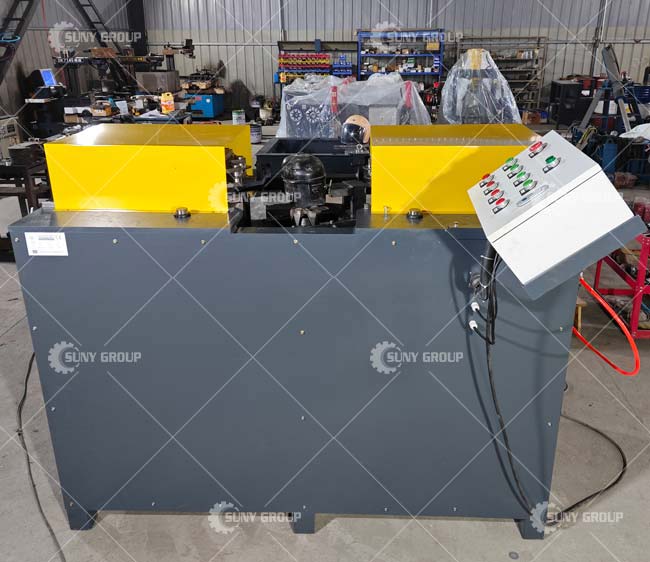
Metal briquetting machines typically consist of a feeding system, compression chamber, hydraulic system, die, ejection mechanism, electrical control system, and finished product conveying device. PLC automatic control can complete feeding, compression, pressure holding, and discharge according to a set program, reducing manual operation and maintaining relatively stable dimensions and weight of each briquette. Some machines can also be equipped with an oil recovery system to collect the cutting fluid discharged during compression.
Metal briquetting machines are not limited to a single metal. Commonly processed materials include aluminum shavings, iron shavings, steel shavings, cast iron shavings, copper shavings, and brass shavings. Different materials vary significantly in density, hardness, shaving shape, and oil content; therefore, actual selection cannot solely rely on the maximum pressure of the equipment. It is also necessary to consider the characteristics of the raw material to determine the briquette diameter, die structure, compression force, and production capacity.
For example, aluminum shavings typically have a low bulk density. A 2026 study indicated that the typical bulk density of loose aluminum shavings is approximately 150–350 kg/m³, and after processing, it may retain 2%–8% moisture and 3%–15% cutting oil. This is one of the key reasons why aluminum scrap is suitable for briquetting: compression significantly reduces the volume of loose material and improves subsequent handling and smelting processes.
Equipment types are generally divided into vertical and horizontal. Vertical metal briquetting machines have a relatively compact footprint and are often used for small to medium-scale metal scrap processing; horizontal equipment is more suitable for larger continuous processing volumes. For example, some horizontal models can have rated pressures increased from 6300 kN to 20000 kN, corresponding to a steel scrap processing capacity of approximately 4–25 t/h, suitable for medium to large-scale metal scrap recycling sites.

INQUIRY